
News
India and New Zealand have concluded negotiations on a Free Trade Agreement (FTA), aiming to significantly enhance bilateral trade, investment flows, and mobility of skilled professionals. The agreement is projected to double bilateral trade to USD 5 billion within five years.
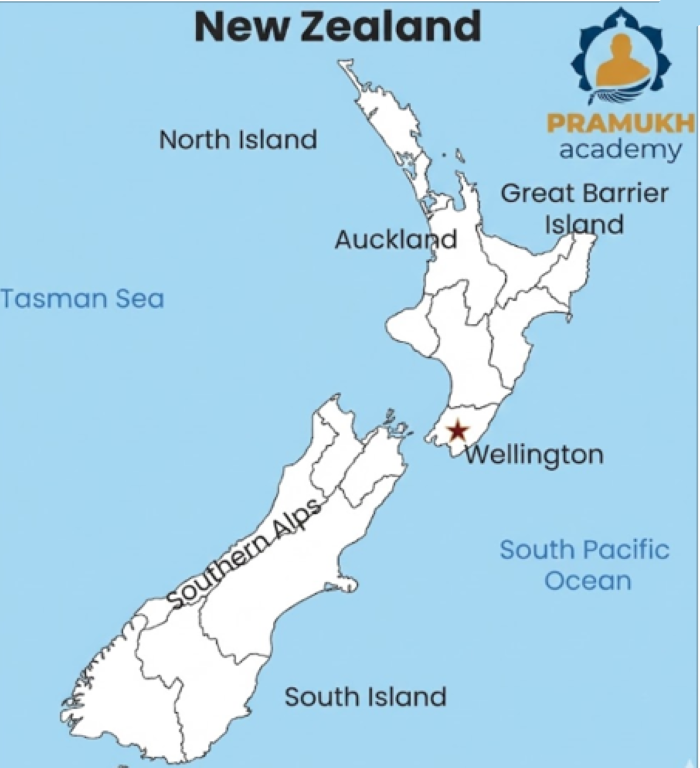
Key points
- FTA negotiations concluded
- Talks between India and New Zealand have been successfully wrapped up.
-
- The agreement is expected to be signed in the first half of 2026.
- Market access & tariff liberalisation
- India will gain duty-free access to New Zealand markets.
-
- 95% of New Zealand’s exports to India will see tariff removal or reduction.
- Key sectors covered
- Duty-free access for products like sheep meat, wool, forestry products, fruits, seafood, wine, honey, and milk albumins.
-
- Sensitive Indian sectors such as dairy, rice, wheat, soya, sugar, edible oils, and spices have been excluded.
- Investment commitments
- New Zealand has committed USD 20 billion in investments over 15 years.
-
- Focus on infrastructure, logistics, renewable energy, food processing, and services.
- Mobility & visas
- New Zealand will provide 5,000 work visas annually for Indian professionals.
-
- Temporary employment and stay allowed for up to three years.
- Political & strategic significance
- PM Modi described the FTA as a “historic milestone” reflecting shared ambition.
-
- Reinforces India’s Indo-Pacific economic engagement strategy.
- Economic impact
- Aims to double bilateral trade to USD 5 billion in five years.
-
- Enhances India’s integration into global value chains.
Static Info (Prelims Notes)

Free Trade Agreements (FTAs):
Free Trade Agreements (FTAs) are formal trade arrangements between two or more countries that seek to liberalise trade by reducing or eliminating barriers such as customs duties, quotas, and other import–export restrictions.These agreements grant preferential market access to member countries through tariff concessions and the easing of non-tariff barriers.
Key Features of FTAs
- FTAs encompass trade in goods, including agricultural and industrial products, as well as trade in services such as banking, information technology, and construction.
- Modern or comprehensive FTAs often extend beyond trade and include provisions related to:
-
- Foreign investment
- Intellectual Property Rights (IPRs)
- Government procurement
-
- Competition policy and regulatory cooperation
Types of Trade Agreements
- Partial Scope Agreement (PSA): Covers trade liberalisation for a selected list of goods.
- Free Trade Agreement (FTA): Member countries reduce or eliminate tariffs among themselves while maintaining independent trade policies for non-member countries.
- Customs Union: Member nations adopt a common external tariff for imports from non-members.
- Common Market: Allows free movement of goods, services, capital, and labour among members.
- Economic Union: Involves deeper integration through coordination of macroeconomic, fiscal, and exchange rate policies.
India’s Major Trade Agreements
India has entered into several trade agreements, including the India–ASEAN FTA and the India–South Korea Comprehensive Economic Partnership Agreement (CEPA).
Additionally, India is negotiating or proposing broader trade agreements with partners such as the United Kingdom and the European Union.

Shaheed Udham Singh: The Courageous Avenger of Jallianwala Bagh
India’s struggle for independence was shaped not only by political movements but also by the fearless acts of revolutionaries who [...]

‘वंदेमातरम’ सिर्फ़ गीत नहीं, हमारा संकल्प
दिनांक 7 नवंबर 2025 ये दिन भारतीय इतिहास के स्वर्णिम अक्षरों में लिखा गया है क्योंकि आज से ठीक 150 [...]

UPSC PRATIBHA Setu: A Second Gateway for Aspirants to Shine Beyond the Exam
Every year, lakhs of aspirants appear for the UPSC examination. They dedicate the golden years of their lives and invest their [...]
जब किसी और की समझ बंद होती है वहां से ब्यूरोक्रेट की सोच शुरू होनी चाहिए
निश्चित रूप से, Prof. D. P. Agrawal ने सिविल सेवा और यूपीएससी से संबंधित विभिन्न पहलुओं पर एक बहुत ही [...]

International Tiger Day 2025: Date, Importance & Awareness
India, being a host of 70% of global tiger’s population is all set to celebrate international tiger’s day, at this [...]