
Introduction
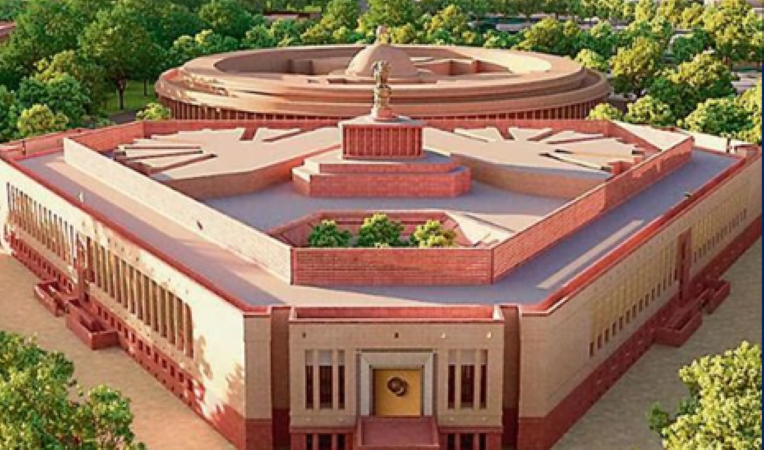
“The twilight of deliberation: When Parliament becomes a rubber stamp” captures a deeper democratic malaise where legislative debate, scrutiny, and accountability are steadily giving way to executive dominance. The article argues that Parliament, constitutionally designed as the central forum of public deliberation, risks being reduced to a formal approver of executive decisions, especially in matters of legislation, budgeting, and institutional oversight.
Key Issues Highlighted
- Erosion of Parliamentary Deliberation
- Bills are passed rapidly, undermining reasoned law-making.
- Example: Major legislations cleared without committee scrutiny.
- Weakening of Budgetary Control
- 1. Parliament’s core power—control over the purse—is diluted.
- 2. Example: Demands for Grants passed with minimal discussion using guillotine.
- Marginalisation of Parliamentary Committees
- 1. Committees act as deliberative buffers, now increasingly bypassed.
- 2. Example: Declining percentage of Bills referred to Standing Committees.
- Executive Dominance over Legislature
- 1. Parliament functions more as a ratifying authority than a deliberative one.
- 2. Example: Frequent use of ordinances and fast-tracked Bills.
- Disruption vs Accountability Narrative
- 1. Blame is shifted to Opposition disruptions, obscuring executive responsibility.
- 2. Example: Shortened sessions justified by “productivity” metrics.
- Bills are passed rapidly, undermining reasoned law-making.
- Example: Major legislations cleared without committee scrutiny.
- 1. Parliament’s core power—control over the purse—is diluted.
- 2. Example: Demands for Grants passed with minimal discussion using guillotine.
- 1. Committees act as deliberative buffers, now increasingly bypassed.
- 2. Example: Declining percentage of Bills referred to Standing Committees.
- 1. Parliament functions more as a ratifying authority than a deliberative one.
- 2. Example: Frequent use of ordinances and fast-tracked Bills.
- 1. Blame is shifted to Opposition disruptions, obscuring executive responsibility.
- 2. Example: Shortened sessions justified by “productivity” metrics.
Key Points
Winter Session productivity figures mask reduced quality of debate and scrutiny.
- Multiple Bills passed with limited discussion, often without referral to Parliamentary Standing Committees.
- Budgetary scrutiny weakened, with minimal debate on Demands for Grants.
- Opposition disruptions are cited, but executive curtailment of discussion is under-examined.
- Use of guillotine and voice vote increasingly replaces clause-by-clause deliberation.
(Static linkage: Articles 107–111, 112–117, Rules of Procedure of Parliament, concept of parliamentary supremacy in financial matters)
Global Practices
| United Kingdom | Strong committee scrutiny of Bills and budgets |
| Germany (Bundestag) | Mandatory committee vetting and federal checks |
| Canada | Detailed pre-legislative scrutiny and opposition days |
| Australia | Robust Senate oversight over executive legislation |
| South Africa | Constitutional mandate for public consultation in law-making |
(Lesson: Effective legislatures prioritise deliberation over speed)
Indian Committee / Policy References
| National Commission to Review the Working of the Constitution (NCRWC) | Emphasised Parliament as the primary deliberative forum. |
| Second Administrative Reforms Commission (ARC) | Recommended strengthening committee systems. |
| Presiding Officers’ Conferences | Highlighted decline in quality of debates. |
| National Civil Aviation Policy, 2016 | Allows structured scrutiny; underutilised in practice. |
Way Forward
- Mandate committee scrutiny for all major Bills, except genuine emergencies.
- Reform productivity metrics to include quality of debate, not sitting hours alone.
- Restore detailed budget discussions, especially on social sector allocations.
- Strengthen the role of the Opposition through guaranteed discussion time.
- Limit excessive use of guillotine and voice votes in financial matters.
- Institutionalise pre-legislative consultation to deepen democratic legitimacy.
Conclusion
Parliament is not merely a law-passing body but the conscience of a constitutional democracy. When deliberation fades and scrutiny weakens, governance may become efficient, but democracy becomes hollow. Reviving Parliament’s deliberative spirit is essential not just for institutional balance, but for preserving the moral authority of India’s constitutional order.
Pramukh Prelims Pointers (10-11 Sept 2026)
Current Affairs · UPSC Prelims & MainsPramukh Prelims Pointers10–11 September 2026PolityInternational RelationsEnvironmentScience & TechnologyDefenceSources: The Hindu, Indian Express, Mint and PIB08Topics [...]
Current Affairs MCQs by Divas Sir – 10 September 2026 | Hindi & English
Daily practice · Hindi + EnglishCurrent Affairs MCQsby Divas Sir10 September 2026 · Test your recall. Understand the why.UPSC CSEState PSCsSSC [...]
Parliament Monsoon Session 2026: Understanding Indian Polity Through Current Affairs
Parliament Monsoon Session 2026 explained for UPSC - parliamentary productivity, executive accountability, Question Hour, committees, a Prelims MCQ and a Mains answer approach.
Independence Day Celebration at Pramukh Academy
Pramukh Academy Vadodara celebrates Independence Day 2026 with Pujya Sadhujans and students - explore our UPSC and GPSC preparation ecosystem.
12 Schedules of the Indian Constitution: Complete UPSC & GPSC Notes
All 12 Schedules of the Indian Constitution explained for UPSC and GPSC Prelims & Mains — memory tricks, amendment years, and a quick revision table.
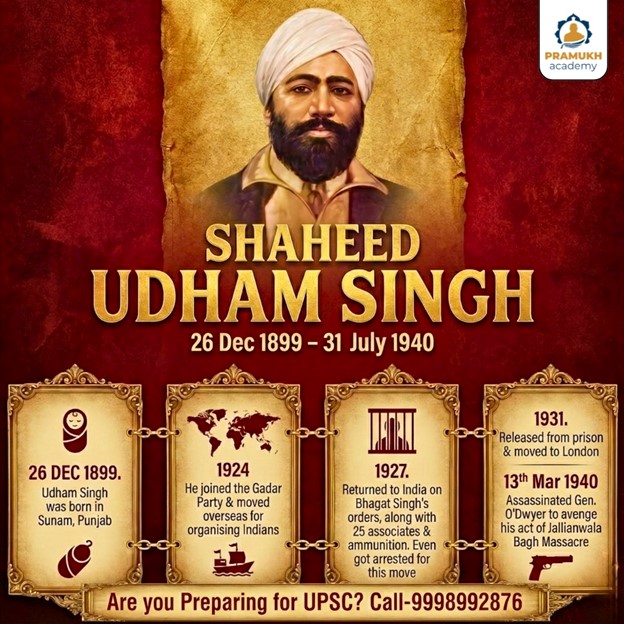
Shaheed Udham Singh: The Courageous Avenger of Jallianwala Bagh
India’s struggle for independence was shaped not only by political movements but also by the fearless acts of revolutionaries who [...]