Introduction
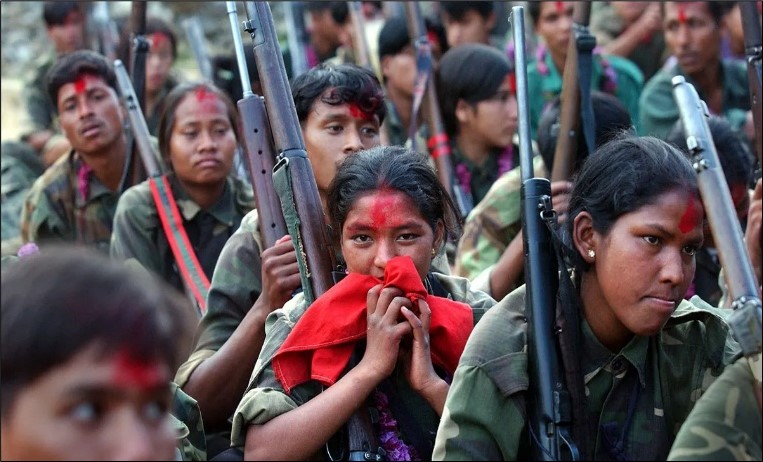
“Security camps, the game changer in the Maoist fight” captures a decisive shift in India’s long battle against Left Wing Extremism. From reactive operations and episodic deployments, the State has moved towards permanent security presence in remote tribal regions. This strategy has altered the balance of power on the ground by restoring governance, improving civilian confidence, and shrinking Maoist influence to isolated pockets.
Key Facts From the Article
● Maoist violence has declined by over 90% since 2010.
● Affected districts reduced from 90+ to about 20 across central and eastern India.
● Bastar division (Chhattisgarh) remains the core residual theatre.
● Establishment of forward security camps in remote areas is the key operational shift.
● Improved police-population ratio and faster response time.
Key Issues & Insights
- Breaking Maoist Territorial Control
- Earlier, Maoists controlled inaccessible forested zones.
- Example: Security camps dismantled “liberated zones” in Bastar.
- Psychological Shift Among Locals
- Permanent presence reassures civilians and weakens Maoist intimidation.
- Example: Villagers now approach police without fear.
- Disruption of Maoist Logistics
- Camps block movement, recruitment, and extortion networks.
-
- Example: Reduced ability of Maoists to regroup after encounters.
- Enabling Governance Penetration
- Roads, ration delivery, health and education follow security.
-
- Example: Panchayats, patwari, and tehsildar reaching interiors.
- Reduced Reaction Time for Security Forces
- Camps enable quick response instead of delayed reinforcements.
-
- Example: Maoists forced into defensive posture.
Global / Comparative Best Practices
| Clear–Hold–Build (CHB) Model | Used in counter-insurgency globally (e.g., Colombia). |
| Permanent State Presence | Security and administration together. |
| Population-Centric Policing | Winning trust rather than only kinetic operations. |
| Integrated Development Approach | Security enabling welfare delivery. |
| Local Force Empowerment | Recruitment of locals into security and governance roles. |
Indian Policy & Institutional Perspective
| SAMADHAN Doctrine | Holistic LWE strategy (Security + Development). |
| CRPF & State Police Coordination | Unified command approach. |
| Aspirational Districts Programme | Targeted development in LWE regions. |
| PESA & FRA Implementation | Tribal rights and inclusion. |
| Road Connectivity (RCPLWEA) | Infrastructure as security multiplier. |
Way Forward
- Convert security gains into governance gains through rapid service delivery.
- Strengthen Panchayati Raj Institutions in newly secured areas.
- Expand livelihood opportunities to prevent Maoist re-recruitment.
- Improve civil administration presence alongside security camps.
- Focus on rights-based development (land, forest, welfare entitlements).
- Gradual transition from security-led to governance-led control.
Conclusion
Security camps have fundamentally altered the Maoist battlefield by reclaiming territory, trust, and state authority. Yet, enduring peace will depend on whether governance replaces the gun. The Maoist problem is no longer primarily a security challenge-it is now a test of administrative capacity and inclusive development.
Pramukh Prelims Pointers (10-11 Sept 2026)
Current Affairs · UPSC Prelims & MainsPramukh Prelims Pointers10–11 September 2026PolityInternational RelationsEnvironmentScience & TechnologyDefenceSources: The Hindu, Indian Express, Mint and PIB08Topics [...]
Current Affairs MCQs by Divas Sir – 10 September 2026 | Hindi & English
Daily practice · Hindi + EnglishCurrent Affairs MCQsby Divas Sir10 September 2026 · Test your recall. Understand the why.UPSC CSEState PSCsSSC [...]
Parliament Monsoon Session 2026: Understanding Indian Polity Through Current Affairs
Parliament Monsoon Session 2026 explained for UPSC - parliamentary productivity, executive accountability, Question Hour, committees, a Prelims MCQ and a Mains answer approach.
Independence Day Celebration at Pramukh Academy
Pramukh Academy Vadodara celebrates Independence Day 2026 with Pujya Sadhujans and students - explore our UPSC and GPSC preparation ecosystem.
12 Schedules of the Indian Constitution: Complete UPSC & GPSC Notes
All 12 Schedules of the Indian Constitution explained for UPSC and GPSC Prelims & Mains — memory tricks, amendment years, and a quick revision table.
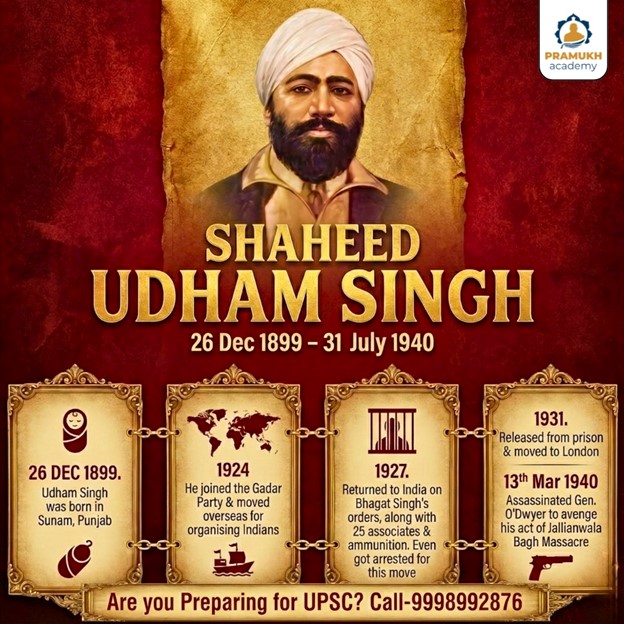
Shaheed Udham Singh: The Courageous Avenger of Jallianwala Bagh
India’s struggle for independence was shaped not only by political movements but also by the fearless acts of revolutionaries who [...]