Introduction
“Indian aviation safety: its dangerous credibility deficit” underlines a deep institutional crisis rather than a single tragic accident. While India projects itself as one of the world’s fastest-growing aviation markets, repeated failures in accident investigation, transparency, and regulatory independence are steadily eroding public trust and international credibility in India’s aviation safety regime.
Key Facts From the Article
- India is a signatory to ICAO and bound by ICAO Annex 13 (Aircraft Accident and Incident Investigation).
- Investigation of major crashes like AI-171 (Ahmedabad) involved:
- AAIB (India)
- NTSB (USA)
- TSB (Canada)
- India has witnessed three fatal aviation accidents in ~15 years.
- Key aviation regulators:
- DGCA – operational oversight
- AAIB – accident investigation
- CVR (Cockpit Voice Recorder) and FDR (Flight Data Recorder) are legally protected under Annex 13.
Key Issues & Insights
Opacity in Accident Investigation
1. Selective leaks instead of official disclosure.
2. Example: Media speculation replacing institutional clarity after AI-171.
Weak Independence of AAIB
1. AAIB structurally dependent on the Ministry of Civil Aviation.
2. Example: Political control over what should be a technical inquiry.
Violation of ICAO Annex 13 Norms
1. Cockpit data discussed publicly without final report.
2. Example: Breach of confidentiality of CVR/FDR content.
Regulatory Overload on DGCA
1. DGCA stretched with operations, audits, expansions, and safety.
2. Example: Expansion-driven aviation growth without matching safety capacity.
Erosion of Public and Global Trust
1. Loss of confidence among passengers and international partners.
2. Example: Contrast with FAA grounding Boeing 737 MAX globally.
Global Practices / Comparative Lessons
| United States (NTSB) | Fully independent accident investigation authority. |
| European Union (EASA) | Strong separation of regulator and investigator. |
| United Kingdom (AAIB-UK) | Transparent final reports, zero political interference. |
| Australia (ATSB) | Safety-first culture, no blame approach. |
| ICAO Best Practice | Clear demarcation between safety investigation and liability. |
Indian Policy & Institutional Recommendations
- Make AAIB fully independent by statute.
- Separate safety investigation from MoCA control.
- Adopt ICAO Annex 13 in letter and spirit.
- Strengthen DGCA manpower and technical capacity.
- Create a transparent public communication protocol.
Way Forward
1. Legally guarantee functional autonomy of AAIB through parliamentary law.
2. Institutionalise zero-leak, report-only disclosure norms for crashes.
3. Build specialised aviation forensics capacity within India.
4. Align India’s aviation growth with safety-first governance.
5. Introduce independent safety audits of DGCA and AAIB.
6. Restore public trust by prioritising transparency over image management.
Conclusion
India’s aviation future depends not merely on fleet size or airport numbers, but on institutional credibility. Without transparent investigations, independent regulators, and strict adherence to global norms, aviation growth becomes fragile. Safety is not negotiable and credibility once lost is difficult to regain.
Shaheed Udham Singh: The Courageous Avenger of Jallianwala Bagh
India’s struggle for independence was shaped not only by political movements but also by the fearless acts of revolutionaries who [...]
‘वंदेमातरम’ सिर्फ़ गीत नहीं, हमारा संकल्प
दिनांक 7 नवंबर 2025 ये दिन भारतीय इतिहास के स्वर्णिम अक्षरों में लिखा गया है क्योंकि आज से ठीक 150 [...]

UPSC PRATIBHA Setu: A Second Gateway for Aspirants to Shine Beyond the Exam
Every year, lakhs of aspirants appear for the UPSC examination. They dedicate the golden years of their lives and invest their [...]
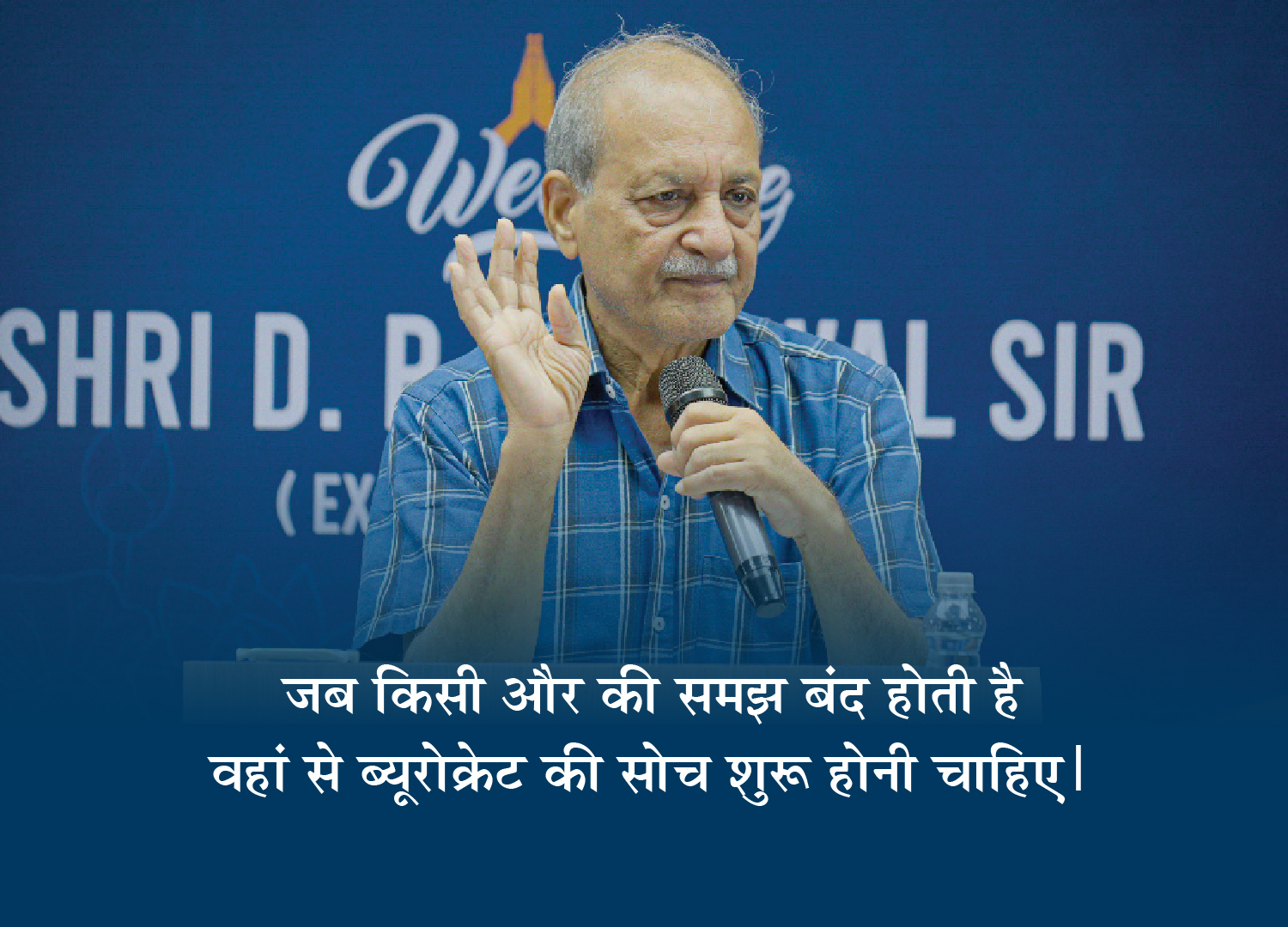
जब किसी और की समझ बंद होती है वहां से ब्यूरोक्रेट की सोच शुरू होनी चाहिए
निश्चित रूप से, Prof. D. P. Agrawal ने सिविल सेवा और यूपीएससी से संबंधित विभिन्न पहलुओं पर एक बहुत ही [...]

International Tiger Day 2025: Date, Importance & Awareness
India, being a host of 70% of global tiger’s population is all set to celebrate international tiger’s day, at this [...]