Source: The Hindu
Key Facts:
-
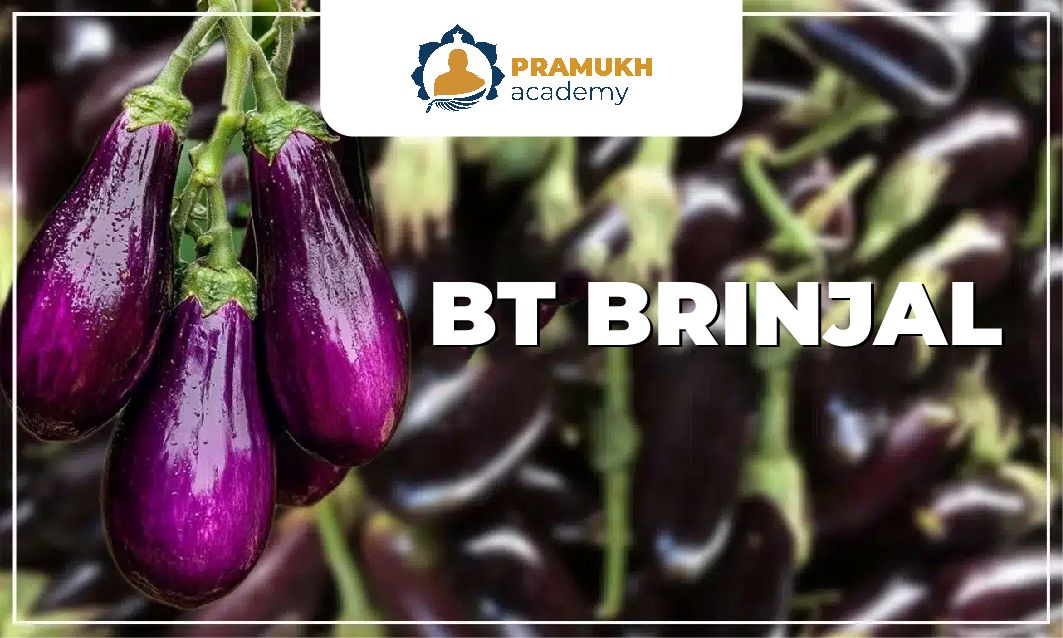
In 2019, a farmer in Nathwan village, Fatehabad, unknowingly planted illegal GM Bt brinjal purchased from a roadside vendor.
- Bt brinjal cultivation is banned in India; only field trials are allowed under strict regulation.
- Authorities uprooted and buried the crop on May 17, 2019 to prevent contamination.
- Multiple RTIs (2019–2025) reveal the government still cannot trace the origin of the GM seeds.
- Haryana’s Biotechnology Coordination Committee investigated but found no evidence about the seed source.
- Horticulture Department admitted receiving complaints but denied information on how seeds entered the market.
- Environmental activists accuse the government of a “casual approach” to a serious biosafety breach.
- Concerns raised:
- Illegal GM seeds may contaminate the food chain.
- Gene flow could occur through cross-pollination in open fields.
- Farmers lack awareness and are vulnerable to spurious seed sellers.
- Farmer said he purchased the saplings from a roadside vendor, but no record exists in official files.
- Activists say the failure to trace the source after six years shows weak seed surveillance and biosafety enforcement.
- Demands include:
- Prioritising GM contamination monitoring,
- Ensuring accountability of officials,
- Strengthening seed supply chain regulation.
Static Information
Source: Genetic Engineering Appraisal Committee (GEAC), Ministry of Environment; Food Safety and Standards Authority of India (FSSAI)
-
GM crop regulation in India is overseen by the GEAC under the Environment (Protection) Act, 1986.
- Commercial cultivation of Bt brinjal is banned in India since 2010; only Bangladesh has approved it.
- Introduction of GMOs in open fields risks:
- Transgene escape via cross-pollination,
- Contamination of non-GM crops,
- Unintended ecological impacts.
- Sale or distribution of unapproved GM seeds is a violation of the Seed Act, 1966, and the EPA, 1986.
- India uses a case-by-case biosafety evaluation, including environmental risk assessment before any GM crop release.
- GM food import or presence in food items is restricted unless cleared under FSSAI GMO safety rules.
- Seed certification and supply chain monitoring falls under state agriculture and horticulture departments.
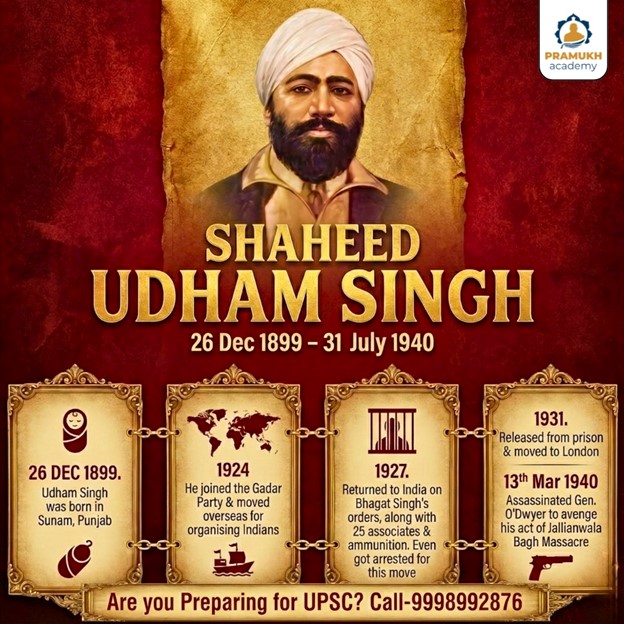
Shaheed Udham Singh: The Courageous Avenger of Jallianwala Bagh
India’s struggle for independence was shaped not only by political movements but also by the fearless acts of revolutionaries who [...]
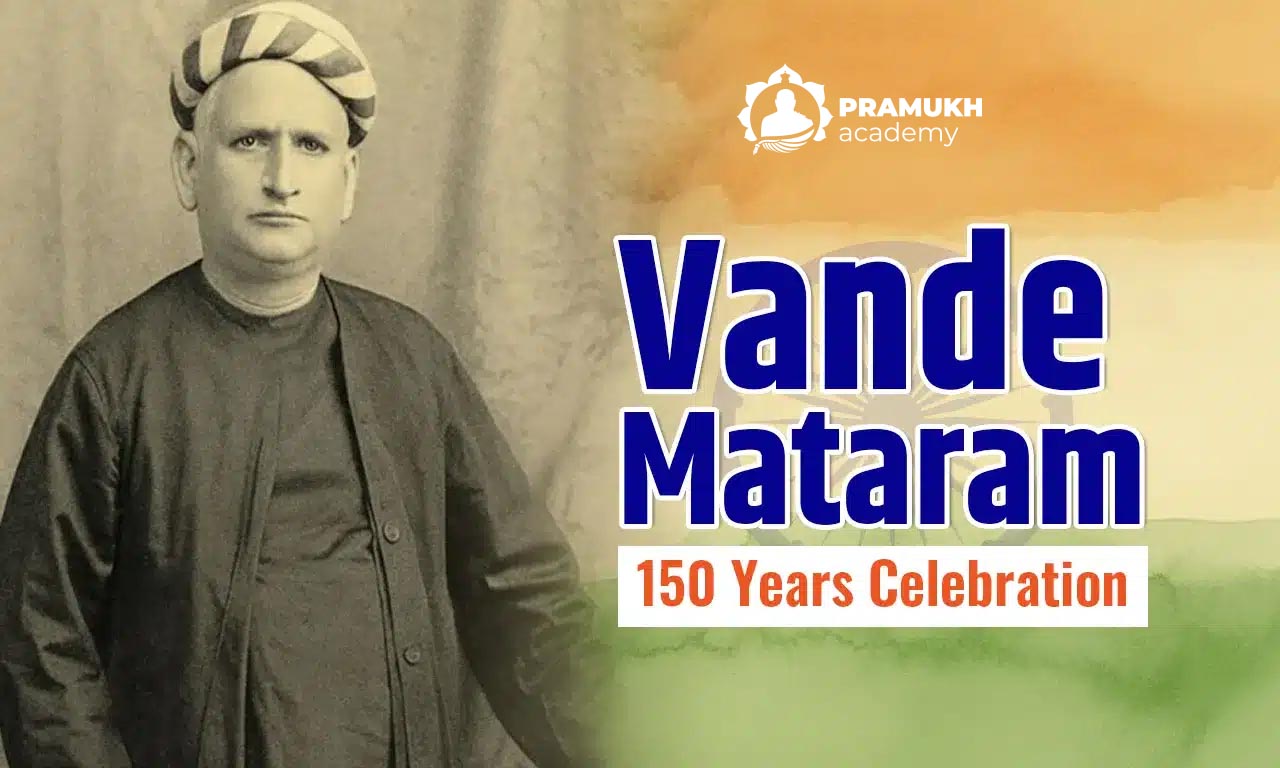
‘वंदेमातरम’ सिर्फ़ गीत नहीं, हमारा संकल्प
दिनांक 7 नवंबर 2025 ये दिन भारतीय इतिहास के स्वर्णिम अक्षरों में लिखा गया है क्योंकि आज से ठीक 150 [...]

UPSC PRATIBHA Setu: A Second Gateway for Aspirants to Shine Beyond the Exam
Every year, lakhs of aspirants appear for the UPSC examination. They dedicate the golden years of their lives and invest their [...]
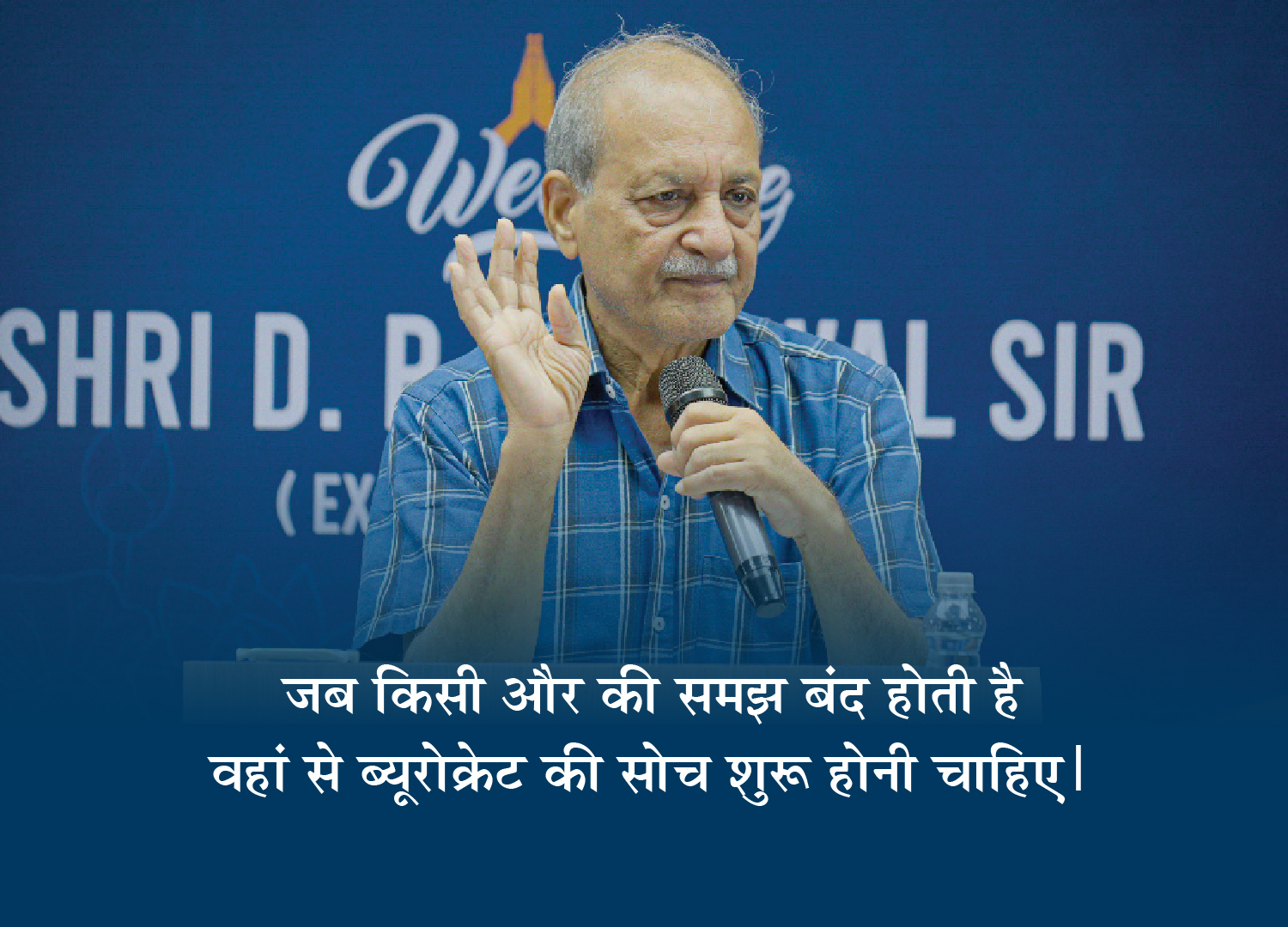
जब किसी और की समझ बंद होती है वहां से ब्यूरोक्रेट की सोच शुरू होनी चाहिए
निश्चित रूप से, Prof. D. P. Agrawal ने सिविल सेवा और यूपीएससी से संबंधित विभिन्न पहलुओं पर एक बहुत ही [...]
International Tiger Day 2025: Date, Importance & Awareness
India, being a host of 70% of global tiger’s population is all set to celebrate international tiger’s day, at this [...]