
Editorial Analysis — The Hindu, November 2025
Industrial green belts have long been used in India as visible markers of environmental responsibility. These green patches are considered compensatory buffers meant to absorb pollutants and soften the ecological footprint of industrial activity. However, recent efforts by certain states to dilute green-cover requirements—based on selective, and often misleading, international comparisons—signal a deeper problem.
While industrial green belts offer short-term mitigation, they cannot replicate the complex ecological functions of natural forests, wetlands, grasslands, or interconnected ecosystems. For a country grappling with climate stress, habitat loss, and unprecedented land-use pressure, symbolic greenery is not environmental stewardship. The need of the hour is a landscape-scale, science-led, region-specific approach that transcends narrow green-belt metrics.
Key Issues:
1. Green Belts Mitigate Pollution but Cannot Restore Ecosystems
Industrial green belts can indeed filter dust, reduce PM levels by nearly 60–65%, and suppress noise. But environmental restoration is far more complex.
Natural forests provide:
- Hydrological regulation
- Wildlife connectivity
- Long-term carbon sequestration
- Soil formation and nutrient cycling
Industrial plantations—often thin, fragmented, and poorly maintained—simply cannot replicate these multi-layered functions.
2. Global Comparisons: Ignore India’s Socio-Ecological Realities
Borrowing global green-cover norms without accounting for local conditions is fundamentally flawed.
Countries with low population pressure cannot be compared to India, where:
- Ecological stress is high,
- Industrial density is increasing,
- Landscapes are fragmented, and
- Communities depend on local ecosystems for livelihoods.
Thus, a 30–33% green-cover benchmark used in Europe cannot be transplanted into India’s industrial regions.
3. Industrial Plantations Often Break Ecological Continuity
Most industrial plantations rely on fast-growing monocultures, such as acacia, eucalyptus, or ornamental species. These:
- Support negligible biodiversity
- Provide no wildlife movement corridors
- Fail to enable soil restoration
- Collapse without maintenance
In fragmented landscapes, such plantations can further sever ecological continuity instead of strengthening it.
4. Relaxation of Green Norms Can Endanger Sensitive Habitats
Several ecologically fragile zones—coastal belts, semi-arid regions, river basins—require stringent green and buffer norms.
Universal relaxation of norms may:
- Destabilise coastal wetlands
- Reduce mangrove buffers
- Increase flood vulnerability
- Shrink common lands
A uniform “ease-of-doing-business” framework cannot override ecological carrying capacity.
5. Most environmental clearances focus on project-level mitigation, ignoring cumulative impacts across regions. As a result:
- Small green islands remain isolated
- Climate resilience does not improve
- Flood risks persist
- Heat island effects intensify
Industrial regions must be planned as integrated ecological units, not as fragmented industrial estates.
Global Practices
Japan – Ecological Industrial Integration
Blends industry with river systems, community forests, and native vegetation buffers. Prioritises watershed and catchment integrity.
Germany – Ecological Zoning
Mandates strict ecological corridors, habitat passages, and native species plantations. Industrial clusters undergo periodic eco-audits.
United Kingdom – Green Infrastructure Over Green Belts
Focuses on the connectivity of habitats—wetlands, parks, woodlands—integrated across urban-industrial systems.
Singapore – “Nature-Positive” Industrial Design
Incorporates rooftop forests, rain gardens, and wetland buffers directly into industrial architecture.
Global Shift:
Green Belt → Green Infrastructure → Landscape Restoration → Nature-Positive Industrial Policy
Indian Committees & Expert Recommendations
1. Expert Committee on Environmental Standards
Insisted on replacing exotic monocultures with native, region-specific vegetation.
2. National Biodiversity Authority (NBA)
Recommended habitat connectivity planning for industrial corridors.
3. Forest Conservation Act Committees
Stressed avoiding diversion of natural forests and cautioned against purely symbolic compensatory plantations.
4. National Green Tribunal (NGT)
Emphasised the importance of cumulative environmental impact, not isolated project assessment.
5. MoEFCC Expert Group on Industrial Siting
Advocated ecological-zoning-based siting rather than blanket green-belt prescriptions.
Way Forward
1. Shift from Plantation Thinking to Landscape Ecology
Eco-regions—not administrative boundaries—should guide industrial planning.
Policies must aim at restoring degraded landscapes, not merely beautifying industrial facades.
2. Integrate Industrial Zones with Regional Ecological Networks
Green belts must feed into broader systems:
- Wetlands
- Riverine corridors
- Reserve forests
- Community-managed commons
This enhances biodiversity flow and climate resilience.
3. Promote Native Vegetation, Not Monocultures
Indigenous species:
- Stabilise soils
- Support pollinators
- Sustain micro-fauna
- Improve long-term ecological health
Ban or discourage ecologically unproductive species, such as eucalyptus, in industrial buffers.
4. Mandate Green Infrastructure in Industrial Policy
Every industrial zone should adopt:
- Green roofs
- Permeable pavements
- Decentralised stormwater wetlands
- Tree-lined mobility corridors
- Bioswales
This transforms industries into active contributors to the ecosystem.
5. Strengthen EIA With Ecological Restoration Mandates
EIA must require:
- Region-specific ecological restoration plans
- Multi-species native plantations
- Assessment of long-term landscape impacts
Short-term mitigation must not substitute for ecological recovery.
6. Incentivise Restoration Through Policy Tools
Provide:
- Carbon credits
- Tax rebates
- CSR-linked restoration zones
- Community-managed ecological projects
Such incentives encourage industries to rebuild rather than merely compensate.
7. Align Industrial Policy With Climate Adaptation
Ecological buffers can significantly reduce:
- Urban heat islands
- Flood risks
- Storm impacts
- Groundwater depletion
Vegetation must be treated as critical infrastructure, not ornamental compliance.
Conclusion
Industrial green belts offer important pollution mitigation, but they cannot—and must not—be mistaken for ecological restoration. India’s environmental future lies in adopting landscape-scale, science-driven, context-specific ecological planning. As industrial expansion picks up pace, integrating ecology into design, policy, and long-term planning will be a decisive factor in shaping a climate-resilient, sustainable, and ethically grounded development path.

Shaheed Udham Singh: The Courageous Avenger of Jallianwala Bagh
India’s struggle for independence was shaped not only by political movements but also by the fearless acts of revolutionaries who [...]

‘वंदेमातरम’ सिर्फ़ गीत नहीं, हमारा संकल्प
दिनांक 7 नवंबर 2025 ये दिन भारतीय इतिहास के स्वर्णिम अक्षरों में लिखा गया है क्योंकि आज से ठीक 150 [...]

UPSC PRATIBHA Setu: A Second Gateway for Aspirants to Shine Beyond the Exam
Every year, lakhs of aspirants appear for the UPSC examination. They dedicate the golden years of their lives and invest their [...]
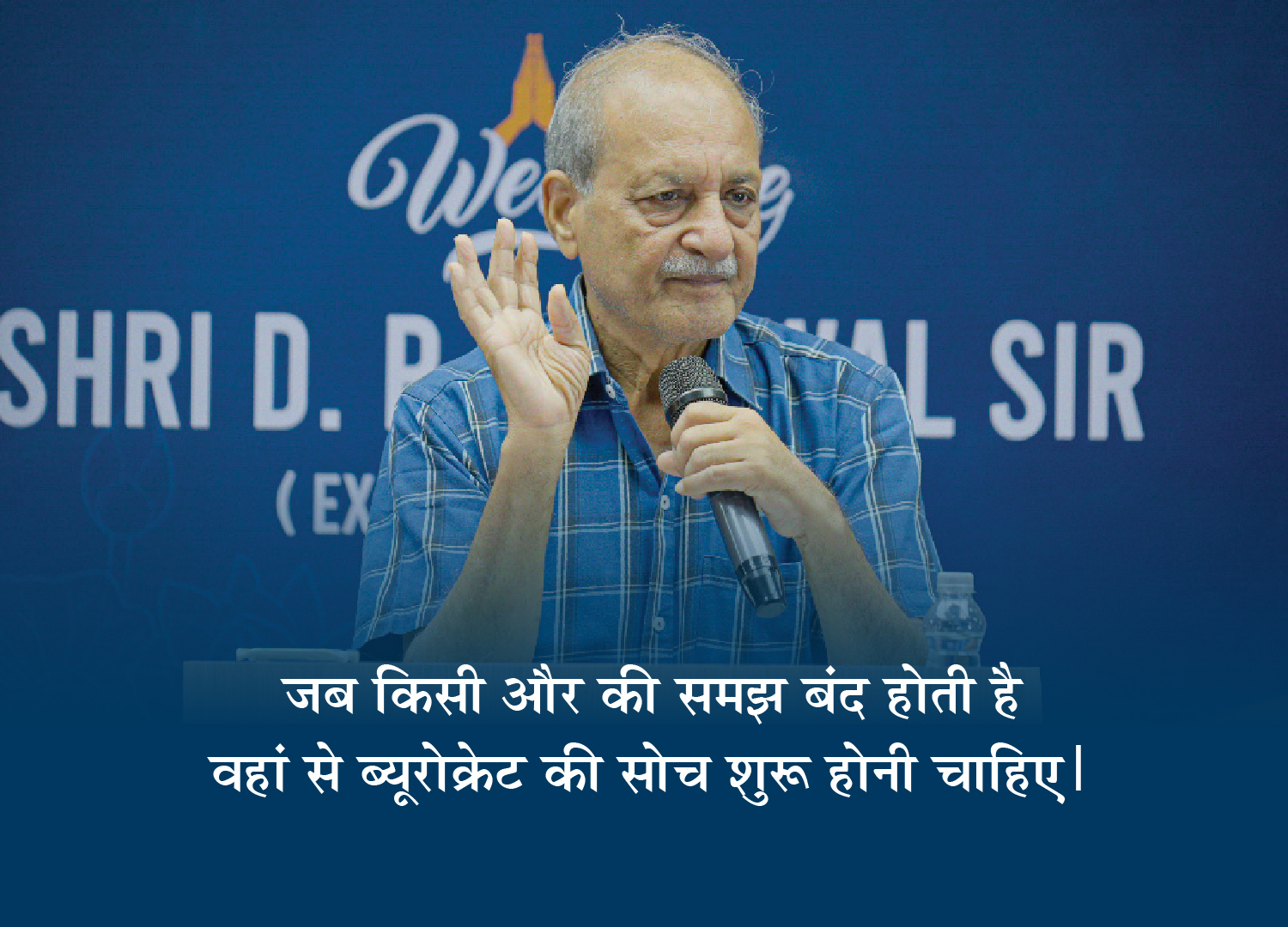
जब किसी और की समझ बंद होती है वहां से ब्यूरोक्रेट की सोच शुरू होनी चाहिए
निश्चित रूप से, Prof. D. P. Agrawal ने सिविल सेवा और यूपीएससी से संबंधित विभिन्न पहलुओं पर एक बहुत ही [...]

International Tiger Day 2025: Date, Importance & Awareness
India, being a host of 70% of global tiger’s population is all set to celebrate international tiger’s day, at this [...]