The Hindu report on NASA’s new images of interstellar Comet 31/ATLAS.
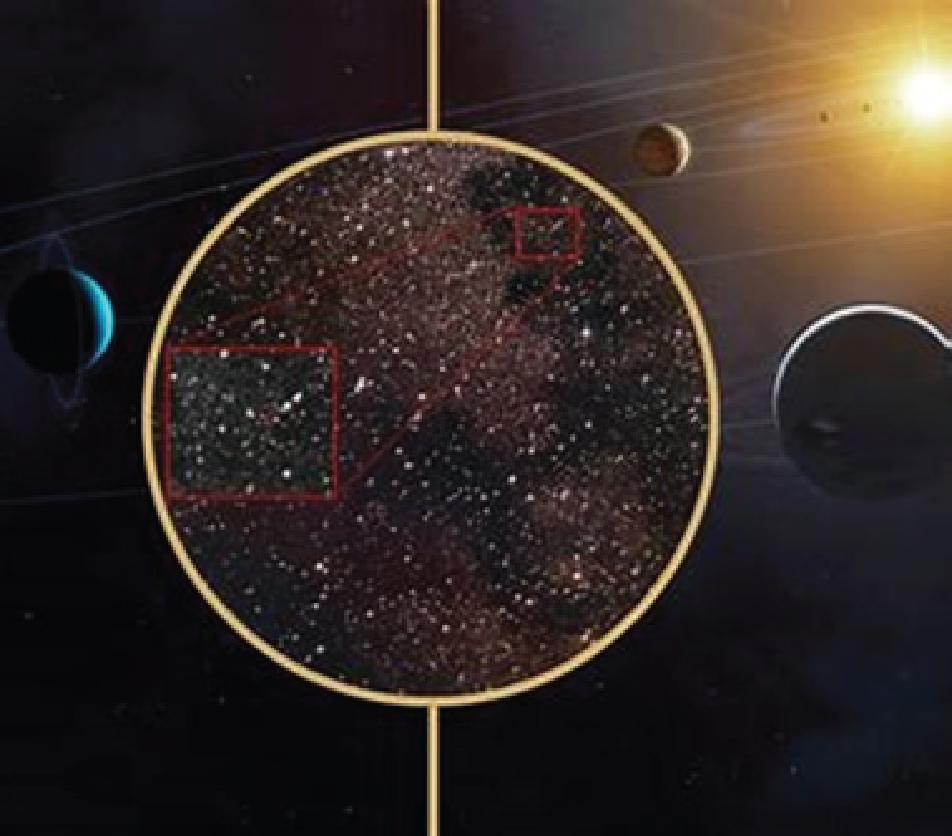
NASA released new images of Comet 31/ATLAS, an interstellar object spotted on July 1. It is only the third known interstellar object identified after ‘Oumuamua and 2I/Borisov.
Key Facts:
- NASA released new images of Comet 31/ATLAS, observed by ESA/NASA’s SOHO mission.
- 31/ATLAS is an interstellar object, meaning it originated from outside the Solar System.
-
This is the third interstellar object detected so far, after:
- 1I/‘Oumuamua (2017)
- 2I/Borisov (2019)
- Interstellar objects are not gravitationally bound to any star.
- They can come from other solar systems and enter ours due to gravitational interactions or collisions.
- To confirm an object as interstellar, scientists analyze its trajectory.
- Solar System objects (planets, asteroids, comets) typically follow closed elliptical orbits.
- Interstellar objects follow open hyperbolic orbits, meaning:
- They move too fast for the Sun’s gravity to pull them back.
- They pass through the Solar System once and escape permanently.
- Near the Sun (perihelion), they accelerate; far away (aphelion), they slow down—but interstellar objects don’t remain bound.
- High-speed detection makes studying them difficult, but they provide clues to other planetary systems.
Static Information
Source: NASA, ESA, International Astronomical Union (IAU)
- An interstellar object (ISO) is a natural object originating outside the Solar System.
- ‘Oumuamua was the first confirmed ISO—elongated shape, unusual acceleration with no comet tail.
- 2I/Borisov resembled a typical comet and showed water and CO emissions.
- ISOs help scientists understand planet formation, the composition of distant star systems, and galactic dynamics.
- Objects on hyperbolic trajectories (eccentricity > 1) are classified as interstellar.
- Detection uses telescopes like Pan-STARRS, SOHO, and upcoming surveys like the Vera Rubin Observatory.
- Interstellar objects may bring organic material, offering insights into life-building molecules in other star systems.
India and Mali Hold Inaugural India-Mali Forum to Promote Exports
UPSC & GPSC · Current Affairs India and Mali Hold Inaugural India-Mali Forum to Promote Exports Source: PIB Delhi What's [...]
INS Trikand
UPSC & GPSC · Current Affairs INS Trikand Source: Indian Navy What's in News Recently, the INS Trikand successfully thwarted [...]
Pramukh Prelims Pointers (10-11 Sept 2026)
Current Affairs · UPSC Prelims & MainsPramukh Prelims Pointers10–11 September 2026PolityInternational RelationsEnvironmentScience & TechnologyDefenceSources: The Hindu, Indian Express, Mint and PIB08Topics [...]
Current Affairs MCQs by Divas Sir – 10 September 2026 | Hindi & English
Daily practice · Hindi + EnglishCurrent Affairs MCQsby Divas Sir10 September 2026 · Test your recall. Understand the why.UPSC CSEState PSCsSSC [...]
Parliament Monsoon Session 2026: Understanding Indian Polity Through Current Affairs
Parliament Monsoon Session 2026 explained for UPSC - parliamentary productivity, executive accountability, Question Hour, committees, a Prelims MCQ and a Mains answer approach.
Independence Day Celebration at Pramukh Academy
Pramukh Academy Vadodara celebrates Independence Day 2026 with Pujya Sadhujans and students - explore our UPSC and GPSC preparation ecosystem.