Introduction
“The deliberate unmaking of India’s right to work” argues that the proposed rollback and restructuring of the Mahatma Gandhi National Rural Employment Guarantee Act (MGNREGA) represents not an administrative reform, but a deeper ideological shift away from rights-based welfare. The article situates MGNREGA as a constitutional expression of social justice and warns that its dilution weakens the State’s obligation to provide livelihood security in a deeply unequal economy.
Key Issues
- Erosion of a Legal Right
- MGNREGA transforms welfare into an enforceable entitlement.
- Example: Replacing it with discretionary schemes removes citizens’ right to demand work.
- Shift from Demand-Driven to Supply-Driven Welfare
- Allocations replace worker demand as the basis of employment.
- Example: States lose flexibility to respond to local distress.
- Fiscal Centralisation
- States increasingly constrained by Union funding caps.
- Example: Delayed wage payments despite completed work.
- Ideological Retreat from Social Democracy
- Preference for market efficiency over social protection.
- Example: Emphasis on “asset creation” over livelihood security.
- Undermining Rural Resilience
- MGNREGA acts as a shock absorber during droughts, pandemics, and job losses.
- Example: COVID-19 saw massive rural return migration cushioned by MGNREGA.
- MGNREGA transforms welfare into an enforceable entitlement.
- Example: Replacing it with discretionary schemes removes citizens’ right to demand work.
- Allocations replace worker demand as the basis of employment.
- Example: States lose flexibility to respond to local distress.
- States increasingly constrained by Union funding caps.
- Example: Delayed wage payments despite completed work.
- Preference for market efficiency over social protection.
- Example: Emphasis on “asset creation” over livelihood security.
- MGNREGA acts as a shock absorber during droughts, pandemics, and job losses.
- Example: COVID-19 saw massive rural return migration cushioned by MGNREGA.
Facts from the Article
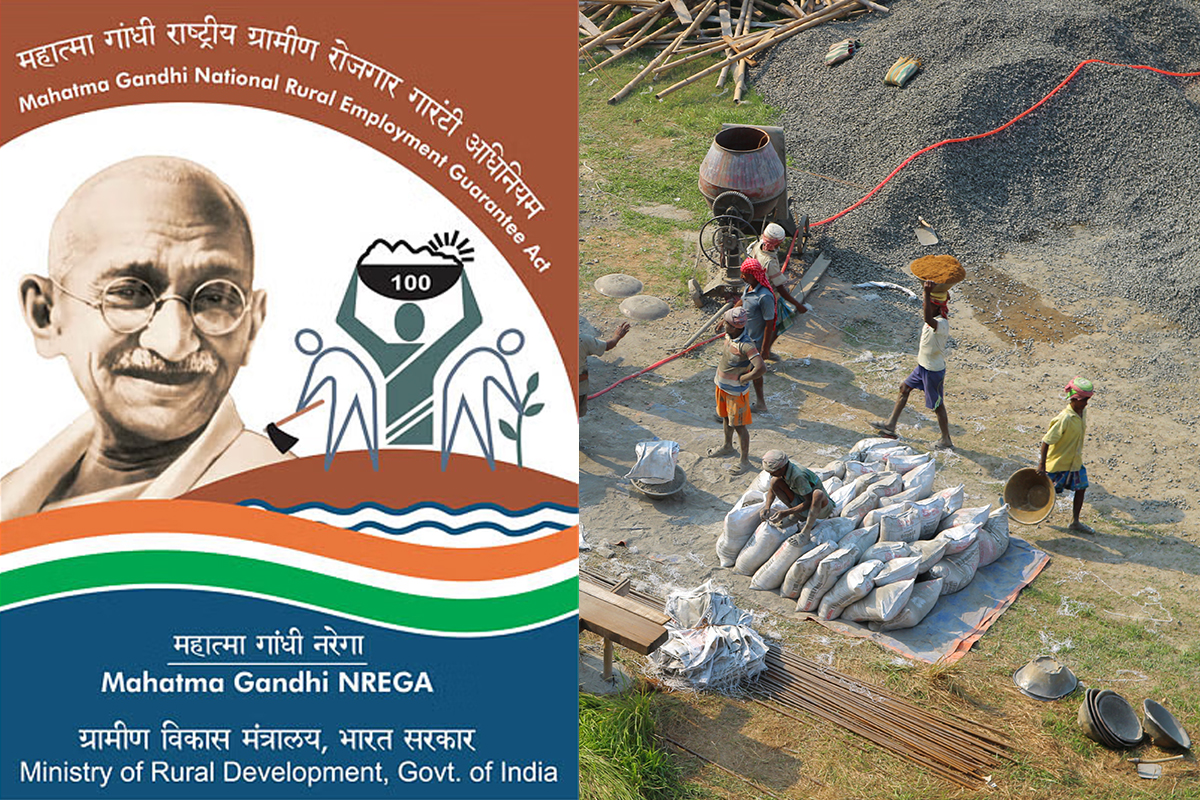
- MGNREGA (2005) is India’s largest rights-based employment programme, guaranteeing 100 days of wage employment.
- It is demand-driven and legally enforceable, unlike discretionary welfare schemes.
- The proposed VB-GRAM framework replaces guaranteed employment with allocation-based schemes.
- Budgetary compression and delayed payments have reduced real wage security.
- Rural distress has intensified due to inflation, climate stress, and informalisation of labour.
Static linkage: Article 21 (Right to Life), Directive Principles (Articles 39, 41, 43), concept of social citizenship (T.H. Marshall)
Global Practices/Comparative Experiences
| Argentina | Jefes y Jefas programme (employment as social right) |
| South Africa | Expanded Public Works Programme |
| Brazil | Bolsa Família + employment linkage |
| Ethiopia | Productive Safety Net Programme (PSNP) |
| OECD countries | Active labour market policies during downturns |
Lesson: Employment guarantees strengthen economic stability and social cohesion.
Indian Committee / Policy References
| Second Administrative Reforms Commission | Advocated rights-based service delivery. |
| National Advisory Council (NAC) | Conceptual architect of MGNREGA. |
| NITI Aayog evaluations | Recognised MGNREGA’s counter-cyclical role. |
| Parliamentary Standing Committees | Repeatedly flagged fund shortages and delays. |
Way Forward
- Restore full legal guarantee of employment under MGNREGA.
- Ensure timely wage payments through automatic compensation mechanisms.
- Index wages to inflation to preserve real income security.
- Strengthen State autonomy in planning and execution.
- Integrate climate-resilient works to address ecological stress.
- Treat employment as a macro-stabiliser, not merely a welfare cost.
Conclusion
MGNREGA is not merely a poverty-alleviation scheme; it is a democratic instrument that affirms the dignity of labour and the State’s constitutional responsibility. Diluting the right to work risks replacing social citizenship with charity, and resilience with precarity. In a labour-surplus economy, employment guarantees are not fiscal indulgences but democratic necessities.
Pramukh Prelims Pointers (10-11 Sept 2026)
Current Affairs · UPSC Prelims & MainsPramukh Prelims Pointers10–11 September 2026PolityInternational RelationsEnvironmentScience & TechnologyDefenceSources: The Hindu, Indian Express, Mint and PIB08Topics [...]
Current Affairs MCQs by Divas Sir – 10 September 2026 | Hindi & English
Daily practice · Hindi + EnglishCurrent Affairs MCQsby Divas Sir10 September 2026 · Test your recall. Understand the why.UPSC CSEState PSCsSSC [...]
Parliament Monsoon Session 2026: Understanding Indian Polity Through Current Affairs
Parliament Monsoon Session 2026 explained for UPSC - parliamentary productivity, executive accountability, Question Hour, committees, a Prelims MCQ and a Mains answer approach.
Independence Day Celebration at Pramukh Academy
Pramukh Academy Vadodara celebrates Independence Day 2026 with Pujya Sadhujans and students - explore our UPSC and GPSC preparation ecosystem.
12 Schedules of the Indian Constitution: Complete UPSC & GPSC Notes
All 12 Schedules of the Indian Constitution explained for UPSC and GPSC Prelims & Mains — memory tricks, amendment years, and a quick revision table.
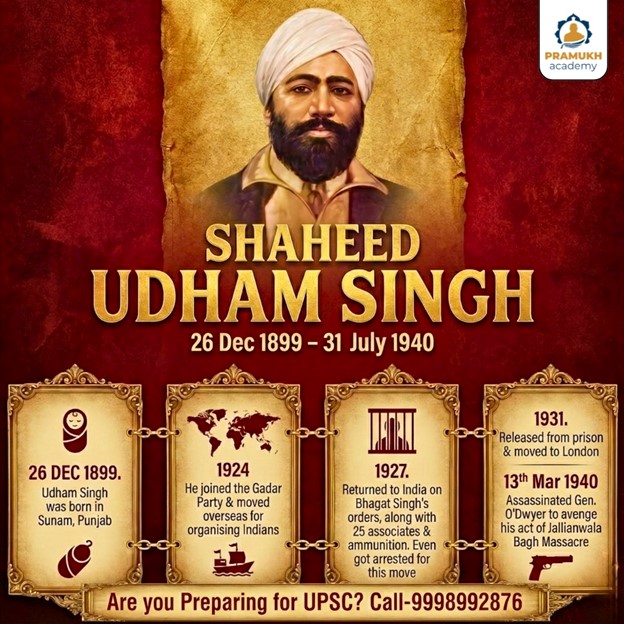
Shaheed Udham Singh: The Courageous Avenger of Jallianwala Bagh
India’s struggle for independence was shaped not only by political movements but also by the fearless acts of revolutionaries who [...]